Showing posts with label rookie of the year. Show all posts

Thursday, April 17, 2014

Throwback Thursday: In 1976, the Bird was the Word

Two golden boys.

He flashed like a yellow-curled beacon across the baseball sky, a brief blip of innocence and fun before free agency and million-dollar contracts changed the game forever. 

Mark Fidrych. Just saying the name still makes me smile. The Pride of Northborough, Mass., debuted for the Tigers this week in 1976, and died this week in 2009. His sore-armed career in the majors lasted only 58 games, but he's still right up there with Dwight Evans, Luis Tiant, and Pedro Martinez in my pantheon of all-time favorite players.

Maybe it's because I was a rookie too in '76, also playing for the Tigers as a 9-year-old in the Newton Central Little League. I could barely throw the ball straight, but in my genuine woolen uniform -- I think the league phased them out after that spring -- I could stand in front of the mirror and pretend I was The Bird. 

Rookie on the rise.

Forty springs on, I can still recite his rookie stats from memory: 19-9, 2.34 ERA, 250.1 innings, 24 complete games in 29 starts. But numbers only begin to tell the story.

Fidrych, then a wide-eyed 21-year-old with parts of just two seasons in the minors, didn't start his first game for the Tigers until May 15 because manager Ralph Houk wanted to work the youngster in slowly. But The Bird -- named after Big Bird on Sesame Street, of course -- only knew one speed: full-tilt. 

Beginning with a two-hitter against Cleveland, he went 8-1 over his first two months, including back-to-back 11-inning complete games and a dismantling of the mighty Yankees on ABC's "Monday Night Baseball" that made him a national phenomenon. Teammates and fans loved watching him pitch, because he did so with precision (just 53 walks), passion, and a train to catch after the ninth. 

He was a man on a mission -- to win and have fun doing it.

Man at work.

The Bird appreciated every second of his time on the field. If a teammate made a great play, he ran over and shook his hand. If the mound needed some tending, he got down on his knees and did it himself. He claimed he didn't talk to the ball, but the fact we all thought he was when he jabbered to himself was good enough.

Red Sox manager Darrell Johnson let the lanky, 6-foot-3 rookie start for the American League in the All-Star Game over the likes of Catfish Hunter, Jim Palmer, and his own ace Luis Tiant, and it was the natural choice. When it came to pleasing fans, nobody did it better; Fidrych packed ballparks wherever he went, and Tigers attendance rose 39 percent from the previous season despite the team's lackluster 74-87 record. 

The Bird was the Word. Girls dug his locks, scooping them up after his haircuts. Rolling Stone put him on the cover. He even got to meet Frank Sinatra, which didn't mean much to him but delighted his mother.  

Bill Lee never got this gig.

Fidrych finished second in the AL Cy Young race to Palmer (he was robbed), and had a limitless future and a new three-year contract for $50,000 a year. Then, in the blink of a slip on the outfield grass while shagging flies in spring training, it was all but over. He injured his knee, requiring surgery, and then after coming back with a string of seven complete games in eight starts mid-way through 1977 suffered a dead arm from which he never recovered. 

Shoulder woes plagued him from this point on, robbing him of his control and his glory. By 1983, after umpteenth comebacks with the Tigers and a last-ditch effort for the Red Sox at Triple A Pawtucket, Fidrych called it quits at the ripe old age of 28. 

Last gas.

He went back to Northboro and became a commercial truck driver and farmer. He later had his own trucking business, mostly doing construction, and hung around the local diner. A working stiff with a wife, daughter, and no regrets he let folks know about.

Occasional "Where Are They Now?" articles appeared to catch us up on The Bird, but the first time Fidrych made real headlines after his retirement was on April 20, 2009, when word spread that he had died at 54 in a freak accident -- apparently crushed after his truck fell on him while he was working on it. 

I dug out my old 1976 Tigers team photo. There I was in the front row, with a Timex and Bill Lee glove on my wrist and a grin on my face.

The future limitless. 

Birds at rest.


Saturday, July 13, 2013

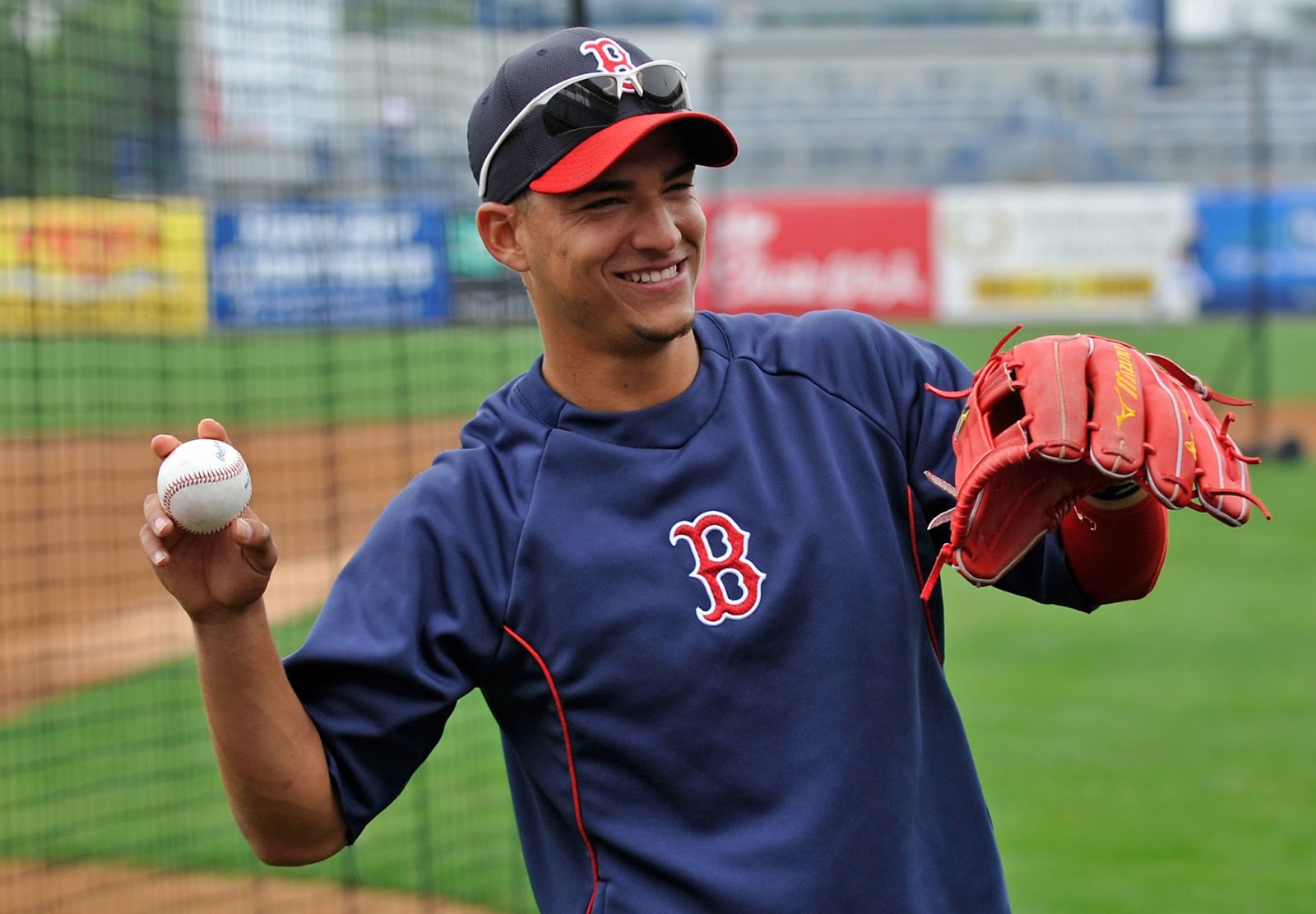
What on earth do Jose Iglesias, Ted Williams, and Manny Ramirez have in common?


These day, the AL's top rookie is all smiles.

Ted Williams. Manny Ramirez. Jose Iglesias. 

One of these things is not like the others -- right?

At first glance, most definitely. Williams and Ramirez are both members of the elite 500 home run club, with slugging and OPS marks that rank among the highest in MLB history. If it wasn't for steroids Ramirez would be a lock to join Teddy Ballgame in the Hall of Fame -- provided Manny ever stopped making comebacks.

Iglesias, in contrast, has hit exactly two major league home runs in 85 games spread over three major-league seasons -- which isn't too surprising considering he hit six in 294 minor league contests. Last year at Triple A Pawtucket he batted a so-so.266, and after a September promotion to Boston went a pitiful 8-for-68 (.118).

Jose is, or was, the classic good-field, no-hit player -- as much a magician with his glove at shortstop as Williams and Ramirez were with their bats. The big question about his chances of sticking with the Red Sox was whether his defense would compensate enough for his anemic offense.
After a 62-150 start in 1941, Williams finished at .406

Now that's all changed, and Iglesias has inexplicably joined Manny (in 2001) and Ted (in 1941) as the only players in the 112-year  history of Boston's AL franchise to achieve an early-season batting feat of red-hot proportions.

A batting average of.400 or better after his first 150 at-bats of the year.

Think about that. The Red Sox have spent more than a century at hitter friendly Fenway Park, home to such expert batsmen as Tris Speaker (a .383 average in 1912), Jimmie Foxx (.360 in '39), Wade Boggs (.368 in '85), and Nomar Garciaparra (.372 in 2000) -- not to mention Ramirez and Williams -- only twice entering 2013 had anybody gotten off to that fast a start.

Had you asked everyone which player on this year's Opening Day roster had a chance of doing it, Iglesias might have been the consensus last choice. 

Despite his fantastic defense, he only made the team because of an injury to projected starting shortstop Stephen Drew. Iglesias went 7-for-12 in the opening series of the year at New York, but experts said it was a fluke. General Manager Ben Cherington apparently agreed, because once Drew was cleared to play Iglesias was sent down to Pawtucket after seven games, a .450 batting average, and a growing list of Web Gems. 

On paper, Drew -- an eight-year veteran with pop in his bat and a steady glove -- was still considered the better player. The Sox were not paying him $9.5 million for the season to sit on the bench, and naysayers pointed out that the majority of Iglesias' early-season hits had been dinky grounders or bloops that found holes. Back in the minors, he actually regressed, hovering around the Mendoza Line at .202 through 33 games.
At Pawtucket in May, Jose was all-field, no-hit.

Then the inexplicable happened. Drew slumped, third baseman Will Middlebrooks got hurt, and Iglesias was recalled on May24 to fill a roster spot. He went 1-for-3 with a run scored that night, playing third and batting ninth. The next day he spelled Drew at short, went 3-for-4 with a double, and raised his average to .484.


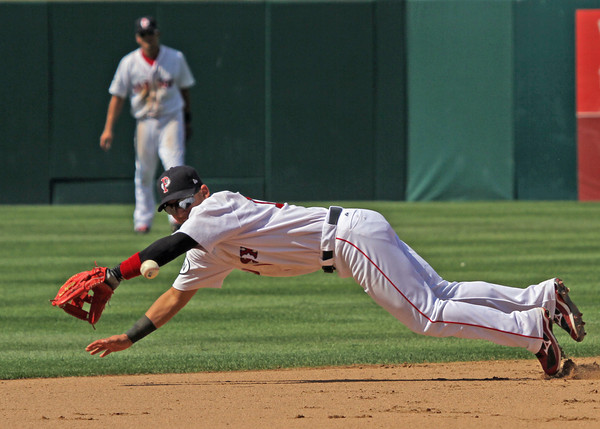
Iglesias has been starting ever since, predominantly at third, and Middlebrooks has been dispatched to the minors to play every day and shake off his sophomore slump. As adept at the hot corner as he was at shortstop, Iglesias has made just two errors all year and snatched up every ball hit anywhere in his zip code. He's even played three flawless games at second base.

The bloops and bleeders of April are now line drives and shots to the gaps, as he has shown more patience and aggressiveness at the plate. His average was still a ridiculous .451 in mid-June, and stayed over .400 all the way until July 6. Named "Rookie of the Month" for June, he is now a front-runner for AL Rookie of the Year. 
Iglesias (scoring) is at the center of the Sox uprising.

A mini-slump (.270 over the last 10 games) has "dropped" Iglesias down to .384, but he's still had at least one hit in 40 of the 50 games he's played -- in which Boston has gone 33-17. He has 10 doubles and a .917 OPS, and nobody is talking about whether Iglesias can hit MLB pitching anymore. He runs hard out of the box and is a fan favorite.

What's next? Will Iglesias' drop-off continue as pitchers get more of a book on him? Will he find himself back on the bench if Middlebrooks returns from Pawtucket and Drew continues his recent resurgence (.364 over nine games). It seems unlikely.

In a way, Iglesias' fortunes mirror those of his team. The Red Sox, 69-93 last year and picked by most experts for another last-place finish in the AL East, currently possess the best record in baseball at 58-37. Nobody expected it, and no one knows how long it will last.
Will it last? Time will tell.

For now, however, it's a ride everyone -- especially Jose Iglesias -- is enjoying.


Saturday, September 1, 2012

Mike Trout may be MVP, but shouldn't be Rookie of the Year


Trout scoring at Fenway -- get used to it.

After last night's debacle in Oakland, I thought I'd stay away from the Red Sox for a change and focus on someone actually having an upbeat year -- although I don't agree with how it is being viewed.

Watching him help the Angels sweep the Sox at Fenway earlier this week, and based on his entire body of work this season, it's clear that Mike Trout is one of the most exciting young players in the majors. He may even be the American League MVP when all is said and done, but there is one thing I don't think the 21-year-old phenom should be:

Rookie of the Year.

Technically, Trout is a rookie. As the MLB rules state, “A player shall be considered a rookie unless, during a previous season or seasons, he has (a) exceeded 130 at-bats or 50 innings pitched in the Major Leagues; or (b) accumulated more than 45 days on the active roster of a Major League club or clubs during the period of 25-player limit (excluding time in the military service and time on the disabled list).

Trout makes the cut – barely. He played in 40 games (32 starts) during 2011, in which he had 123 at-bats. This may qualify someone for rookie status the next year, but it seems like an awful big sample set for me.

Trout is a phenom -- but should he be a rookie?

Forty games is nearly a quarter of the MLB schedule, and in Trout's case these were not just meaningless down-the-stretch contests. His first appearance came on July 8 against Seattle, and he wound up playing 14 games in July, eight in August, and 19 in September as the Angels battled for both an AL West title and a Wild Card spot. They got neither, but Trout – who hit .220 with five home runs and 16 RBI – got plenty of experience.

This year, of course, has been a different story. Trout has been with the Angels since late April and has torn up the league with an AL-best .336 average, 41 stolen bases, and 103 runs scored (along with 25 home runs) entering last night. Much hoopla was made when he became the first rookie to have both 25 homers and 40 steals during the Red Sox series, but he just doesn't feel like a first-year guy to me.

He was an everyday player for Los Angeles during a good stretch of LAST season, and while he may seem like an entirely different performer this year, Trout is in fact the same guy who had already seen plenty of big-league pitching entering 2012. To me, a true Rookie of the Year (ROY) winner is a guy who debuts the year he captures the award, or at most plays in 10 or 15 September games the previous season.

Baseball is the only one of the four major professional sports that has this type of shady rookie status. Football players, of course, go straight from college onto NFL rosters and have zero pro experience entering their first year. Ditto for hockey players, who enter the NHL from college or the minor league ranks. And while basketball players may have overseas professional experience, the first NBA games for every Rookie of the Year are played during his initial season in the league.

Blake Griffin -- a "true" rookie.

My 11-year-old son Jason had a very perceptive comment when I mentioned this discrepancy to him. “If Mike Trout is able to do this, what will keep managers from making sure young players don't break the 130 at-bat limit so they can get better and older?” I found no proof of this with Trout, who Angels manager Mike Scioscia played all game, every game down the stretch of 2011. It would have been interesting to see what might have happened had Trout gotten six more at-bats, of course.

Jason also had another funny premise: if a guy came up from the minors for 10 games a year for three years, would he still be considered a rookie going into his fourth season? According to the MLB rules above, he would. This seemed too funny to be plausible, but it happened – the 2008 NL ROY, Cubs catcher Geovany Soto, had played with Chicago for one game in 2005, 11 games in 2006, and 18 games in 2007. A fourth-year rookie!


Geovany Soto -- Jason was right.

I first started thinking about Trout's freshman/sophomore status when Will Middlebrooks was shining for the Red Sox earlier this summer. A broken wrist derailed Middlebrooks in mid-August, and even if he had played out the string the chances are slim he would have put together stats like Trout. But since Middlebrooks was a TRUE rookie whose 75 major games, 15 homers, and 54 RBI all came this season, one could argue (outside Los Angeles) that he is a more worthy Rookie of the Year winner than the guy who will get the award.

For some more perspective, I looked back at AL and NL ROY winners from the past 10 seasons to see how they compare with Trout in pre-ROY experience. Soto was the only one I found with three MLB seasons under his belt, but one other player (Angel Berroa in 2003) had played shortstop for the Royals for a combined 35 games and 128 at-bats in 2001-2002. Talk about cutting it close to the 130 at-bat limit!

Most of the others fell into the more reasonable range of 15-20 games and 50-75 at-bats for position players and 5-15 games for pitchers. Six of the 20 awardees were “true” Rookies of the Year who saw their first MLB experience in their winning year – Chris Coughlin, Andrew Bailey, Evan Longoria, Ryan Braun, Dontrelle Willis, and Eric Hinske. Honorable mentions go to 2006 winners Hanley Ramirez and Justin Verlander, who both played in just two games the previous season.

Andrew Bailey -- as true as rookies can get.

I think the system needs some revamping. Lower the pre-ROY maximum numbers to 20 games and/or 50 at-bats for position players, and 10 games and/or 30 innings for pitchers. This will ensure that September call-ups can still be considered rookies, but guys who played three months like Trout last year will be out of luck.

And what if Trout pulls off the double-win and captures both the Rookie of the Year and the MVP awards? He would be just the third man to achieve this feat, after Fred Lynn (in 1975) and Ichiro Suzuki (2001) – two men who offer another contrast in rookies. Lynn played in a reasonable 15 games in September of '74, and while Suzuki was a “true” rookie in '01 with regards to his MLB status, he did have nine seasons and more than 1,000 games in the Japanese professional leagues under his belt.

Now that's another discussion altogether.